
The British Virgin Islands (BVI) offer more than world-class sailing. They’re a tropical escape filled with quiet beaches, lively bars, and local charm.
Before your BVI sailing course, you can relax, explore, and get a feel for island life. Afterward, reward yourself with a few days of great food, calm waters, and hidden spots that most travelers miss.
We’ll show you where to stay, what to eat, and how to make the most of your time before and after your BVI sailing course.
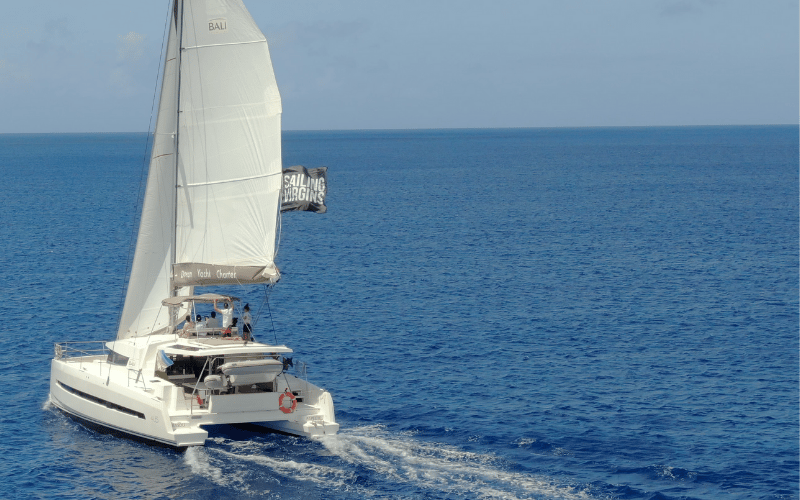
Why the BVI Is Perfect for a Week-Long Sailing Course
There’s a reason sailors love the British Virgin Islands. The water here is calm and glassy, framed by emerald hills and open blue skies.
Trade winds hum through the rigging, steady and warm, perfect for learning the rhythm of sailing. Each island sits close enough for easy day hops yet far enough to feel like a new discovery.
You’ll practise anchoring in quiet bays, steering through turquoise channels, and tasting island life at every stop.
It’s a place that turns first-time sailors into confident skippers before the week is through.
Getting There & Local Transport
You’ll meet your crew at the French Deli in Road Town, where fresh coffee and warm bread set a relaxed tone for the week ahead.
After the course, you’ll return to Road Town as well, which keeps travel simple and familiar.
Flying into Tortola
The simplest route is through Terrance B. Lettsome International Airport (EIS) on Beef Island. It’s 14 minutes from the marina, connected by a short bridge.
Taxis wait outside the terminal. Expect to pay $30 to $45 for a private ride or $12 per person for a shared van.
Most travellers fly through Miami, San Juan, or Antigua before arriving. American Airlines runs direct flights from Miami, offering a short, scenic approach over turquoise water.
Arriving via St. Thomas, U.S. Virgin Islands
Another option is Cyril E. King Airport (STT) on St. Thomas. It’s larger, often cheaper, and adds a bit of adventure to the journey.
- Take a 15-minute taxi to the Charlotte Amalie Ferry Dock. Fares are about $15 per person, cash only.
- Choose Smith’s Ferry, Native Son, or Road Town Fast Ferry. The trip takes 45 to 60 minutes and costs $100 one way.
- Note on Cargo: Policies vary by carrier. Smith’s Ferry uses tiered pricing ($10–$35+) based on size. Native Son allows one free personal item and charges $10 per checked bag. Road Town charges $10 each for the first four bags and $15 thereafter.
- At the Road Town dock, pay a $10 BVI Environment Fee in cash. Customs clearance can take up to an hour.
- After customs, take a quick five- to ten-minute taxi to Wickhams Cay II. Walking is possible, but with luggage and heat, a taxi is easier.
Insider tip: Don’t book a flight that lands in St. Thomas after 2:30 PM. The last ferry leaves around 4:30 or 5:00 PM. If you arrive later, stay overnight on St. Thomas and catch the first ferry in the morning.
View the route from EIS Airport to Wickhams Cay II Marina.
Where to Stay Before Your Course
Arrive a day early if you can. It gives you time to rest, shake off jet lag, and get into the island rhythm before the course begins.
Tortola has great options close to the marina and a few peaceful spots where you can truly switch off.
Village Cay Hotel and Marina
You can’t stay closer to the action. Village Cay Hotel and Marina sits beside the marina, so you can stroll over in minutes.
Rooms are clean and airy, with a pool and a lively waterfront bar where you’ll hear stories from local sailors over cold drinks.
- Price: From $207 per night
- Distance: 5-minute drive to French Deli in Road Town
Maria’s By the Sea Hotel
Maria’s By the Sea Hotel is a long-time favourite among visiting crews. The rooms are bright and spacious, and the restaurant serves local fish with harbour views.
You’ll wake up to the sound of waves and the sight of boats gliding by.
- Price: From $267 per night
- Distance: 5-minute drive to French Deli in Road Town
Sea View Hotel
A no-fuss spot near the ferry dock. Sea View Hotel is simple but friendly, with good food and quick access to the marina.
You’ll hear the chatter of town life from your balcony and catch the scent of sea air every time you step outside.
- Price: From $230 per night
- Distance: 6-minute drive to French Deli in Road Town
Nanny Cay Resort and Marina
A short taxi ride from Road Town, this resort feels like a quiet retreat. Spend the day by the pool, visit the small beach, or order grilled snapper at the open-air restaurant.
Staying at Nanny Cay Resort and Marina is the perfect reset before a week on the water.
- Price: From $252 per night
- Distance: 16-minute drive to French Deli in Road Town
Where you stay depends on your pace. If you’d rather roll out of bed and walk straight to the boat, stay near the marina.
If you’d like to slow down and soak up the tropics before hoisting a sail, a resort stay gives you that easy start.
What to Do Before Your Course
Arriving early gives you time to breathe, unpack, and let the island sink in. The air smells like salt and hibiscus, and the rhythm of island life feels calm but steady.
Use your first day to stretch your legs, sip something cold, and ease into the sea breeze.
Stroll Through J.R. O’Neal Botanic Gardens
J.R. O’Neal Botanic Gardens sit quietly in the middle of Road Town. Palm trees line the paths, orchids hang in the shade, and small tortoises wander by the lily ponds.
It’s an easy walk and a peaceful way to shake off travel fatigue.
- Duration: 1 to 2 hours
- Cost: $3 for the entrance fee
Walk Historic Main Street
This narrow stretch of Road Town tells the island’s story in a few short blocks. Start at the Craft’s Alive Village, where locals sell jewellery, spices, and woven baskets.
Visit the old prison museum and the Virgin Islands Folk Museum, both small but fascinating. You’ll feel the island’s past woven into its present.
- Duration: About 2 hours
- Cost: $5 for museum entry
Have a Painkiller at Pusser’s
Every sailor ends up here eventually. Order Pusser's Painkiller, a smooth mix of rum, pineapple, orange, and coconut, and sit outside by the dock.
Watch the harbour glow gold in the late afternoon as the boats roll gently in the tide.
- Cost: Around $10–$15 per drink
Go Snorkelling at Brewer’s Bay
This calm bay on Tortola’s north shore is perfect for new snorkellers. The water stays clear, the waves stay gentle, and the coral gardens sparkle under the surface.
Bring your own gear and spend a few quiet hours floating among bright fish.
- Duration: 3 to 4 hours (including taxi)
Unwind at Smuggler’s Cove
You’ll find soft sand, calm surf, and almost no crowds. It’s the kind of beach that makes you forget what day it is. Bring a towel, some snacks, and settle under a palm tree while pelicans dive offshore.
- Duration: Half day
A relaxed day before your course sets the tone for the week ahead. Walk, swim, sip, or just sit and listen to the relaxing waves.
What to Do After Your Course
You’ve spent a week trimming sails, setting anchors, and living by the wind. Before you fly home, give yourself time to rest and enjoy the islands from a new angle.
Whether you want a slow day in the sun or a final adventure, Tortola and its neighbours have plenty to offer.
Relax and Recover
- Amara Spa, Road Town: Located inside The Moorings Yacht Club, this small spa sits right by the water. Book a massage or facial and listen to halyards tapping against nearby masts as you unwind.
- Ixora Spa, Scrub Island Resort: If you crave luxury, catch the short ferry to Scrub Island and spend the afternoon here. Ixora Spa overlooks the sea and offers full-service treatments in open-air cabanas.
- Wyndham Lambert Beach Resort Spa: A great mid-range option on Tortola’s northeast coast. The beachfront spa offers massages and body wraps followed by a swim in the resort pool.
Catch a Wave
If you aren't ready to leave the water, trade the sails for a surfboard. Tortola has surprisingly good surfing spots suited for every skill level.
- Josiah’s Bay: This sandy beach break is consistent and family-friendly. Josiah’s Bay is the best spot for beginners and longboarders.
- Apple Bay (Capoon's Bay): The island’s most consistent reef break. Apple Bay is suitable for all surfing levels and sits right next to the famous Bomba Shack.
- Cane Garden Bay: A world-class point break for experienced surfers. Cane Garden Bay requires a large North swell to "fire," but offers long, incredible rides when it does.
Hike Sage Mountain National Park
Sage Mountain National Park reaches 1,716 feet, the highest point in the Virgin Islands. Trails wind through mahogany trees and tropical forest to sweeping island views.
- Cost: Entry is $3
After a week under sail, these few extra days on land let everything sink in. Stretch your legs, breathe the island air, and savour the calm before heading home.
Practical Tips
Local tips can shape your experience in the British Virgin Islands. These insights come from sailors who’ve spent time here and know what makes travel smooth and enjoyable.
Currency and Payments
The British Virgin Islands use the U.S. dollar. You can pay with cards in most hotels, restaurants, and larger shops.
Cash is still useful for taxis, ferries, beach bars, and small markets. Keep a few small bills handy for tips or a cool drink at a roadside stall.
Weather and Seasons
Sailing Virgins runs courses from November through June, when the BVI offers the most reliable conditions for training.
December through April usually bring steady trade winds between fifteen and twenty-five knots. These months feel lively, with bright skies and dependable sailing conditions.
May and June feel calmer. The wind softens, the anchorages quiet down, and the pace shifts into a relaxed rhythm that many students enjoy.
We don’t run courses from July through October. Weather patterns in those months can shift quickly, which makes them less suitable for training.
Connectivity
Most hotels and marinas provide Wi-Fi, but the signal weakens outside town. Many travellers set up an eSIM before arrival. Providers such as Airalo and GigSky offer fast connections from the moment you land.
If you want a local option, buy a prepaid SIM card from Digicel. It works well across the islands.
Tipping and Etiquette
Tipping customs are similar to those in the U.S. Restaurants often include a ten to fifteen percent service charge, though an extra few dollars for great service is always appreciated.
When you speak with someone new, begin with a greeting. A simple “Good morning” or “Good afternoon” goes a long way.
Locals value respect and friendliness, and you’ll feel that warmth returned everywhere you go.
How This Fits Into Your ASA Certification Journey
A week in the British Virgin Islands gives you more than classroom lessons. You’ll learn by doing, feeling the wind shift through the rigging and steering across open water.
Most students complete two ASA certifications during their week-long course:
- ASA 101: Basic Keelboat Sailing
- ASA 103: Basic Coastal Cruising
If you already have experience, you can test out of ASA 101 and begin with higher levels, such as:
- ASA 103: Basic Coastal Cruising
- ASA 104: Bareboat Cruising
Students who train on a catamaran can also earn ASA 114 (Cruising Catamaran).
Sailors who continue their progression through advanced navigation and coastal passagemaking often work toward:
- ASA 105: Coastal Navigation
- ASA 106: Advanced Coastal Cruising
Completing ASA 104 or higher qualifies you to apply for the International Proficiency Certificate (IPC). Charter companies across Europe recognise this as proof that you’re ready to skipper your own boat.
Train With Sailing Virgins and Experience the BVI at Its Best
When you step off the boat, you’ll take more than a certificate. You’ll carry new skills, real-world experience, and friendships built on shared adventure.
If the thought of earning your ASA certifications in turquoise water excites you, start planning your next trip.
Picture the first light spreading across calm seas. Feel the pull of the mainsheet and the quiet satisfaction that comes when every move feels right.
Explore Sailing Virgins’ week-long courses in the BVI and spend a week mastering new skills surrounded by turquoise water!