

Thailand is the center of the sailing scene, with calm bays, short passages, and dependable marina services.
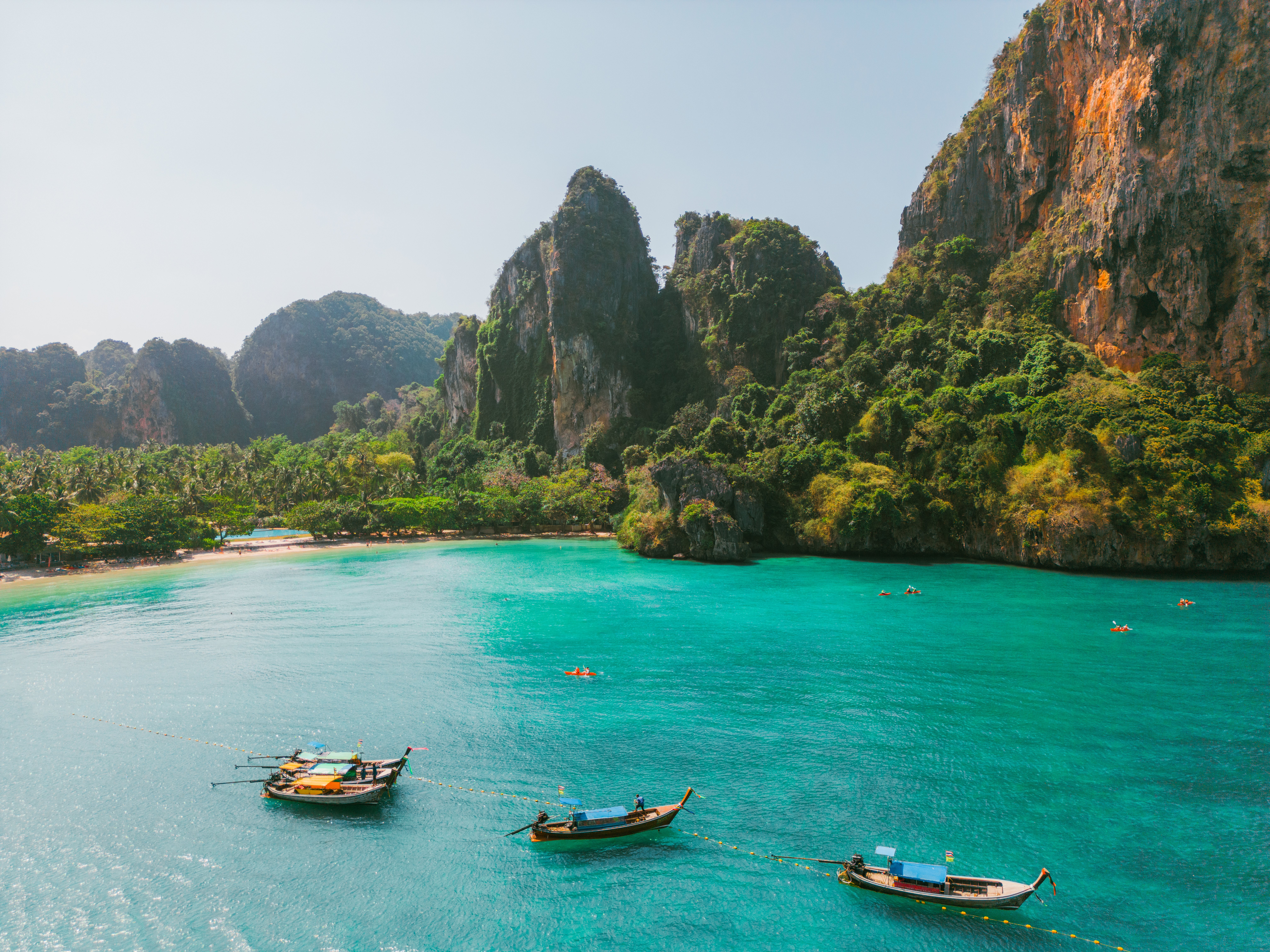
Limestone cliffs rise from clear water. Longtail boats cross quiet channels. Meals arrive hot and fresh after full days outdoors.
This guide shows how to enjoy your time in Thailand. By the end, you’ll know how to plan before & after your Thailand sailing course.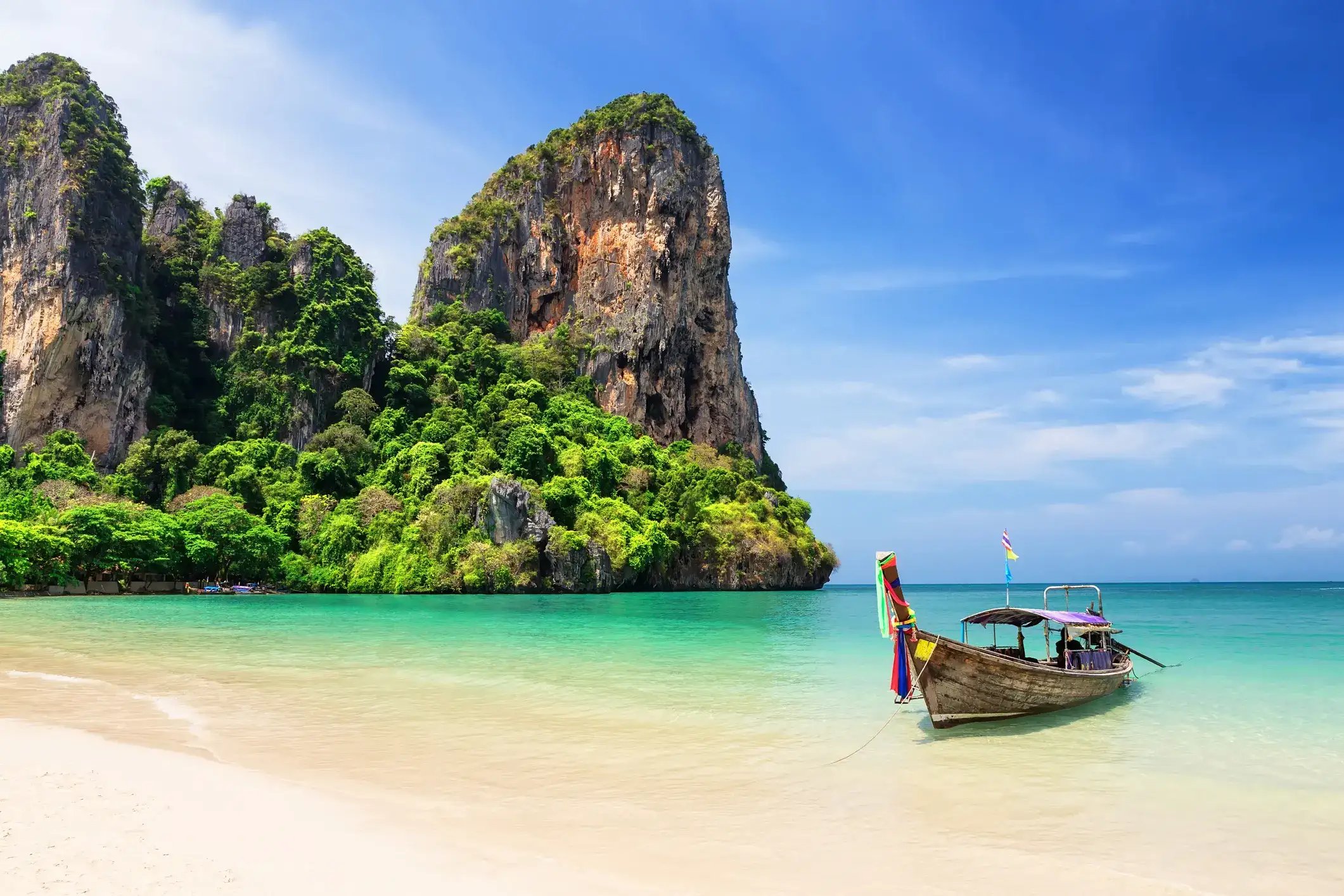
Why Thailand Is Perfect for a Week-Long Sailing Course
Thailand is a great place to hone your sailing skills. The Andaman coast offers consistent breezes during the dry season and protected water between islands.
That gives you space to practice sail trim, navigation, and boat handling during daily passages.
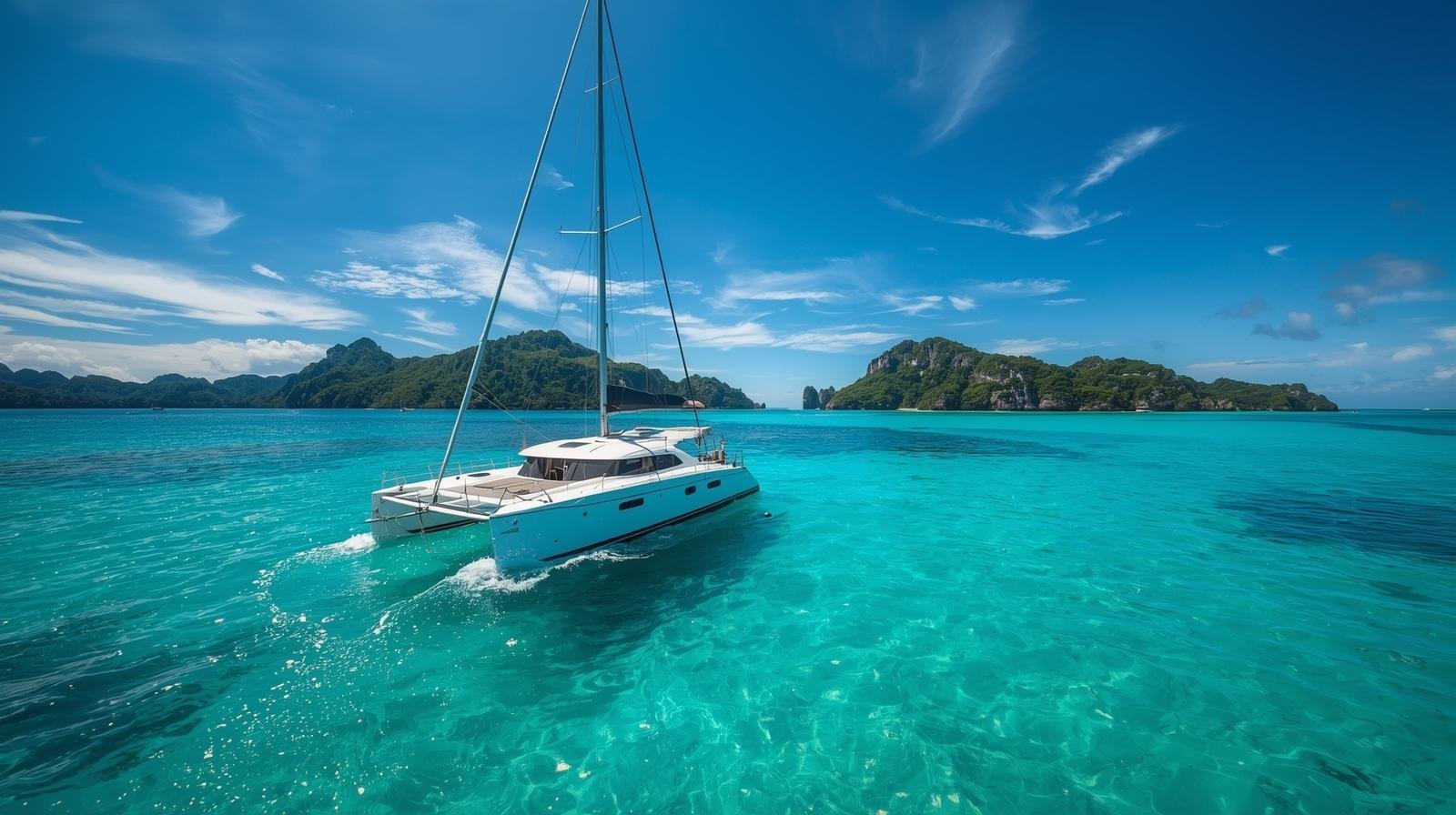
The setting keeps each day engaging. Limestone cliffs line the horizon, and jungle islands frame quiet anchorages. Snorkeling often starts straight from the boat, with reef life close to shore.
Phuket has established marinas, reliable provisioning, and direct international flights. You spend your time sailing and learning without any hassle.
Getting There & Local Transport
You’ll arrive in Phuket with the marina just a short drive away. Most students pass through the same airport and use the same routes north toward Mai Khao.
After the course, you’ll return through this area again, which makes departure easier.
Flying into Phuket
Most international flights land at Phuket International Airport (HKT) on the north end of the island. The airport is located near Mai Khao, where Yacht Haven Marina is located.
The drive from the terminal to the marina usually takes about 10 minutes, depending on traffic.
Getting From the Airport to Your Hotel or the Marina
You’ll see several transport options as soon as you exit arrivals. Here are the most convenient transportation options for you:
- Grab: App-based rides with the fare shown before booking. Pickup details (including the fare) appear in the app, which helps avoid waiting outside the terminal.
- Metered taxis: Airport taxis with air conditioning. Short rides often start around 200 THB ($6), with longer routes reaching up to 800 THB ($25). Ask the driver to use the meter before leaving.
- Private transfers: Pre-booked cars that drive straight to your hotel or the marina. Prices usually range from 900 ($28) to 1,500 THB ($47). Many drivers track flight arrivals and adjust pickup times.
Insider Tips
Before booking, ask your hotel about transfer options. Many properties work with local drivers and can arrange pickup at a set price.
If you’re booking on your own, compare rates on platforms like Klook or 12Go Asia. When using a taxi without a meter, agree on the fare before getting in so you’ll know how much to pay.
Where to Stay Before Your Course
Arrive a day early if you can. It gives you time to sleep properly, adjust to the heat, and ease into island life before the course begins.
Phuket’s north end has great options near Yacht Haven Marina. Some keep you close to the docks. Others offer quiet space to unwind before a full week on the water.
Ruankaew Homestay
A simple, welcoming stay near Mai Khao. Ruankaew Homestay suits travelers who want a calm night close to the marina without resort pricing.
Rooms are clean, the setting feels local, and parking is available if you arrange your own transport.
- Price: Around 860 THB per night (about $27)
- Distance: 11-minute drive to Yacht Haven Marina
JW Marriott Phuket Resort and Spa
Set along Mai Khao Beach, JW Marriott Phuket Resort and Spa gives you room to unwind after a long flight.
Expect beachfront walks, large pools, and several restaurants on site. Turtle Village is nearby for casual meals and supplies.
- Price: Around 6,000 THB per night (about $158)
- Distance: 13-minute drive to Yacht Haven Marina
Marriott’s Phuket Beach Club
This beachfront property offers apartment-style rooms with kitchens and shared resort facilities next door.
Marriott’s Phuket Beach Club is a comfortable option for couples or friends traveling together who want extra space.
- Price: Around 10,800 to 36,000 THB per night (about $300 to $1,000)
- Distance: 14-minute drive to Yacht Haven Marina
Anantara Vacation Club Mai Khao Phuket
Anantara Vacation Club is a villa-style resort with generous room layouts and a quiet atmosphere. Many units include kitchens and outdoor space, which makes it easy to settle in after a long flight.
- Price: Around 39,957 THB per night (about $582)
- Distance: 13-minute drive to Yacht Haven Marina
Where you stay depends on how you want your first day to feel. If you want short transfers and an easy morning, stay close to the marina.
If rest and space matter more, a beach resort nearby gives you time to reset before sailing begins.
What to Do Before Your Course
If you can, arrive a day or two early. Your body will thank you for the extra sleep and time to adjust to the heat and humidity.
Keep plans light. You want to start the course feeling rested, not worn down.
Wander Phuket Old Town
Old Town sits on the east side of the island and feels worlds away from the beach scene. Colorful cafes and buildings line the streets. Street art pops up where you least expect it.
You can see most of it in an hour or two. Walk Thalang Road, duck into side streets, and stop when something smells good.
- Cost: No entrance fee
- Tip: If you’re here on a Sunday, stay into the evening for the market
Explore Lard Yai Sunday Market
Sunday afternoons turn Thalang Road into one long food crawl. Smoke rises from grills while vendors shout orders. Locals and visitors mix shoulder to shoulder.
Come hungry and wander. Lard Yai Sunday Market is the place to try something unfamiliar and see what everyone else is lining up for.
- When: Sundays, 4:00 pm to 10:00 pm
- Cost: Depends on the dish
- Must-try dishes: Pad Thai, satay skewers, mango sticky rice, kanom krok
Go on Phuket City Half-Day Tour
If you’d rather not think about transport or timing, a Phuket city tour keeps things simple. You’ll cover Old Town highlights and a few major viewpoints without spending a full day.
- Cost: About 1,000 THB or roughly $31
- Includes: Transfers and guided stops
Enjoy Southern Thai Dinner at Kin Dee
Near the Sarasin Bridge, Kin Dee is where locals eat when they want proper southern flavors. Bamboo salas sit over a mangrove pond, and the menu leans spicy and bold.
This is a great final dinner before the course week begins.
- Cost: Varies by dish
- Must-try dishes: Gaeng Som and Pak Miang Pad Kai
- Tip: Ask about spice levels before ordering. Thai food can be extremely spicy.
What to Do After Your Course
After a full week on the water, your body will feel tired and sore. The best plan is to slow the pace first, then choose one or two experiences that feel rewarding.
Enjoy relaxing massage, delicious food, and activities that don’t require an early alarm.
Relax at Banyan Tree Spa Phuket
Banyan Tree Spa is the gold standard for spa days on the island. Therapists train on site, and the setting feels calm from the moment you arrive.
It’s an ideal stop once your hands and shoulders start reminding you how much sailing you just did.
- Must-try massage: Royal Banyan massage or aloe-based treatments for sun-exposed skin
- Cost: Varies by massage
- Tip: Book ahead, especially during high season
Eat Dinner at Toh Daeng at Baan Ar Jor
Toh Daeng at Baan Ar Jor focuses on traditional Phuket recipes tied to local families and fishing communities. Flavors are rich and peppery, with Malay influence and deeper sauces than central Thai food.
- Must-try dishes: Moo Hong or Gaeng Som
- Cost: Varies by dish
Get Your Coffee Fix at Ma Doo Bua Lotus Cafe
Set over a pond filled with giant lotus leaves, this cafe works well for a gentle afternoon stop. Ma Doo Bua Lotus Cafe is popular for photos, but it’s also a calm place to sit with a drink and let the week settle.
- Cost: Varies by order
- Tip: Go earlier in the day to avoid crowds
Spend a Day Off Saltwater at Blue Tree Phuket
After a week in salt, fresh water feels like a reset. Blue Tree’s lagoon gives you space to float, paddle, or stretch without waves or current.
Paths around the park suit light walks, and seating areas make it easy to stop and rest.
- Cost: Varies by ticket type
- Tip: Stick to the lagoon and shaded areas if you’re easing back into activity
After the course, there’s no need to chase everything. Choose what sounds good, eat well, and give your body time to recover.
Practical Tips
These tips cover the details sailors usually ask about once they arrive, from money and weather to culture and daily habits.
Money and Payments
You can pay by card at hotels, larger restaurants, and some shops, but many places still prefer notes and coins.
Street food stalls, markets, taxis, laundry services, and temple entrances usually accept cash only.
ATMs charge a withdrawal fee of around 220 THB ($6) per transaction. It often makes sense to withdraw a larger amount at once rather than multiple small withdrawals.
Cards like Wise, Revolut, or Monzo help reduce foreign transaction fees.
Sailing Seasons and Weather
Phuket sailing follows two main patterns.
- November to April: Drier months with settled conditions and steady winds. Days feel warm and predictable.
- May to October: Wetter months with passing squalls and higher humidity. Sailing still works well in protected areas, especially inside bays.
The sun remains intense year-round, so make sure to wear sunscreen.
Connectivity and SIM cards
Most people use an eSIM or their existing carrier with a travel data plan, which works well across Phuket.
If you prefer a local SIM, tourist SIM cards are easy to buy at Phuket International Airport. Providers like AIS and True offer fast data plans with wide coverage across the island.
Signal often remains available even when anchored offshore, which surprises many first-time visitors.
Drinking Water and Hydration
Tap water isn’t safe to drink. Bottled water is available everywhere, from 7 Eleven to beach kiosks.
Thailand is hot and humid, so it’s important to stay hydrated. Drink electrolyte drinks such as Pocari Sweat. It’s widely available and helps replace salts lost through heat and sun exposure.
Transport and Road Safety
Scooters are common, but accidents involving visitors happen frequently. If you choose to rent one, wear a helmet and carry your license or a copy of your passport ID page.
Check that insurance is included and take photos of the bike before riding away. Never hand over your passport as a deposit. Cash deposits are standard and safer.
Language and Culture
Thailand’s Buddhist culture shows up in everyday life. Remove shoes before entering temples and dress modestly at religious sites.
Avoid pointing your feet toward Buddha images or monks. Give monks space on walkways and public transport.
Polite particles often appear at the end of sentences. Men use krap, and women use kha.
Here are some helpful phrases to learn:
- Sawasdee krap or Sawasdee kha for “hello”
- Khop khun krap or Khop khun kha for “thank you”
- Tao rai krap or Tao rai kha for “how much”
- Mai pen rai krap or Mai pen rai krap for “no problem”
These details help daily routines run smoothly, so your attention stays on sailing and enjoying Phuket.
How This Fits Into Your ASA Certification Journey
This week in Thailand isn’t just about time offshore. It’s where training starts to feel like real cruising.
You’re not tied to one harbor or repeating the same drills. You’re sailing between islands, managing daily routines, and learning as situations unfold.
Most students complete these two ASA levels in seven days:
- ASA 103: Basic Coastal Cruising
- ASA 104: Bareboat Cruising
If you have prior experience and join a catamaran course, you may also qualify for the ASA 114 Cruising Catamaran endorsement.
After earning ASA 104, you can apply for the International Proficiency Certificate (IPC). Many charter companies require it when booking yachts in destinations around the world.
Sail Thailand’s Island Routes with Sailing Virgins
Thailand opens up when you give it time. Arrive early, and you’ll settle into the rhythm of warm mornings, fresh food, and slow evenings by the water.
Stay a little longer after the course, and your body unwinds, while the lessons from the week start to sink in.
This guide keeps your plans light and intentional. Handle the essentials, then let the island lead the rest.
The sailing will test you while the scenery will pull you in. Both stay with you well after you leave.
Explore our week-long Thailand courses and earn globally recognized ASA certifications while exploring one of the world’s most rewarding cruising areas.