

The same mindset that gets you down a black diamond at Whistler can have you commanding a 45-foot catamaran in the Caribbean - but here's why most people never make the connection.
Is sailing hard? The short answer is no, not if you're already comfortable with calculated risks, reading natural conditions, and progressive skill building. If you practice adventure sports like skiing, you are already well positioned to master the high seas. Think about it, you can navigate a steep mogul field or carve through fresh powder, you already possess 80% of the mental framework needed to master sailing.
Here's what most people don't understand: sailing isn't inherently difficult. What's difficult is learning sailing the wrong way, from instructors who treat it like a gentle retirement hobby rather than the exhilarating adventure sport it actually is.
We've tracked the learning curves of over 500 students at Sailing Virgins, and the data is striking. Adventure athletes - particularly skiers and snowboarders consistently achieve competency 3x faster than the average sailing student. They're not naturally gifted sailors; they simply approach learning with the right mindset and framework.
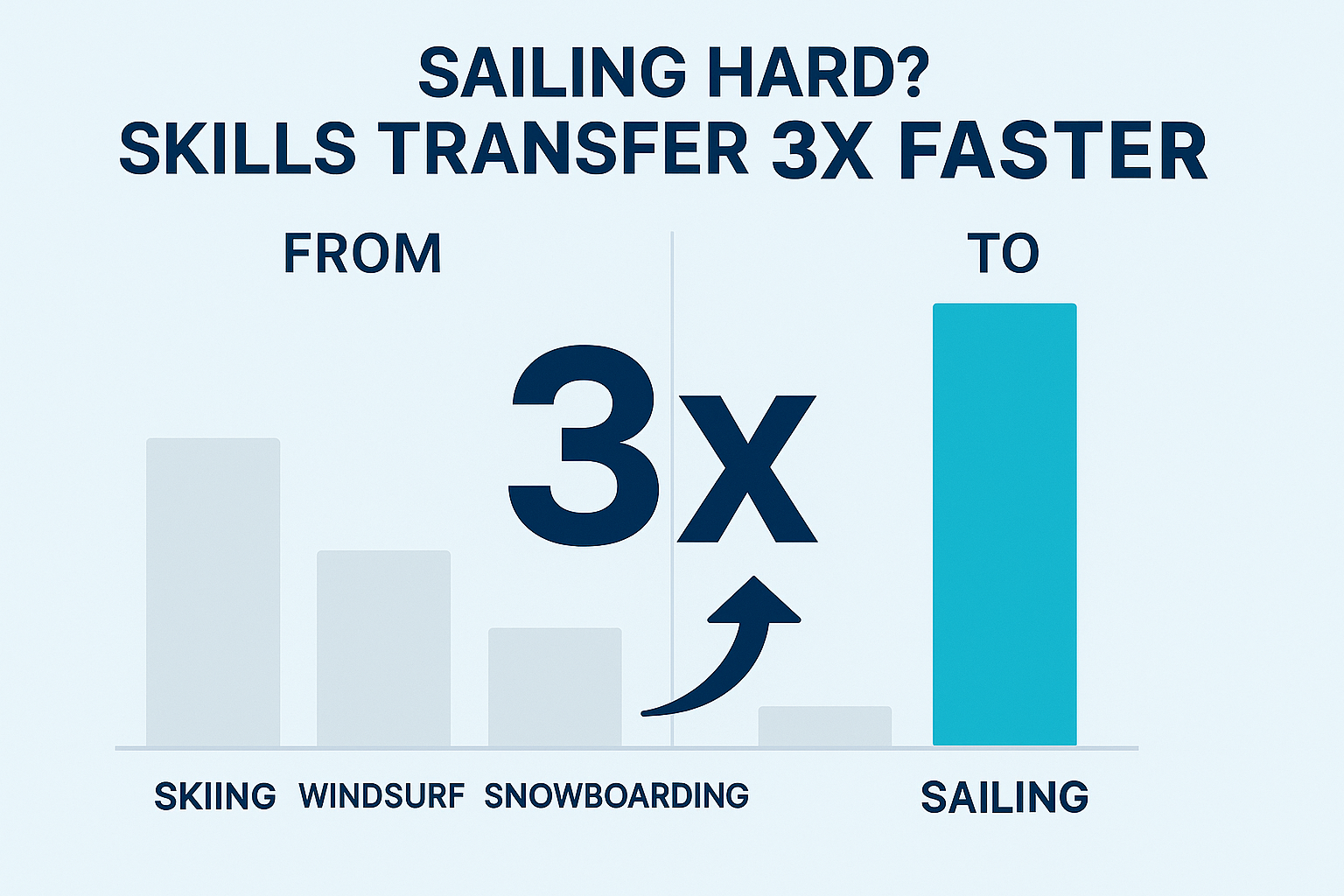
The typical new sailor struggles for months or even years to feel truly confident at the helm. They take weekend courses that crawl along at a retiree pace, focusing more on theory than hands-on experience. They're taught by instructors who prioritize caution over competence, creating a learning environment that would bore any adrenaline junkie to tears.
But adventure athletes? Cutting through this inefficient approach quickly and easily is their specialty. Real learning happens when you're slightly outside your comfort zone - they understand this instinctively. Muscle memory builds through repetition under pressure, and they know exactly how to create these conditions. Most importantly, they recognize that the same flow state that makes skiing magical exists on the water too.
If you've ever felt that perfect moment carving through untouched powder - where instinct takes over, where every movement flows seamlessly into the next - then you already know what it feels like to be a competent sailor. The elements change, but the fundamental experience remains the same: you, your equipment, and the raw power of nature working in perfect harmony.
The question isn't whether sailing is hard. The question is whether you're ready to discover your new off-season obsession.
The Surprising Truth About Sailing Difficulty
Breaking Down the "Hard" Myth
Most people believe sailing is hard because they've been exposed to the wrong version of it. Picture this: you're browsing sailing courses online, and every photo shows people in their 60s and 70s moving at a glacial pace around pristine but boring boats. The instructors speak in whispers about "gentle breezes" and "relaxing afternoons." No wonder it seems boring - it's being taught like it's some delicate art form rather than the dynamic, responsive sport it actually is.
The reality? Modern sailing instruction designed for adventure athletes is completely different. When you strip away the outdated teaching methods and focus on progressive skill building, sailing becomes remarkably intuitive. The boats are more responsive, the learning environment is more dynamic, and the instruction is tailored to people who learn by doing, not by listening to lengthy theoretical explanations.
Traditional sailing schools create artificial difficulty by over-complicating simple concepts. They'll spend hours explaining the physics of lift and drag when what you really need to know is how the boat feels when you're doing it right versus when you're doing it wrong. Adventure athletes already understand this - you don't learn to ski by studying the molecular structure of snow crystals.
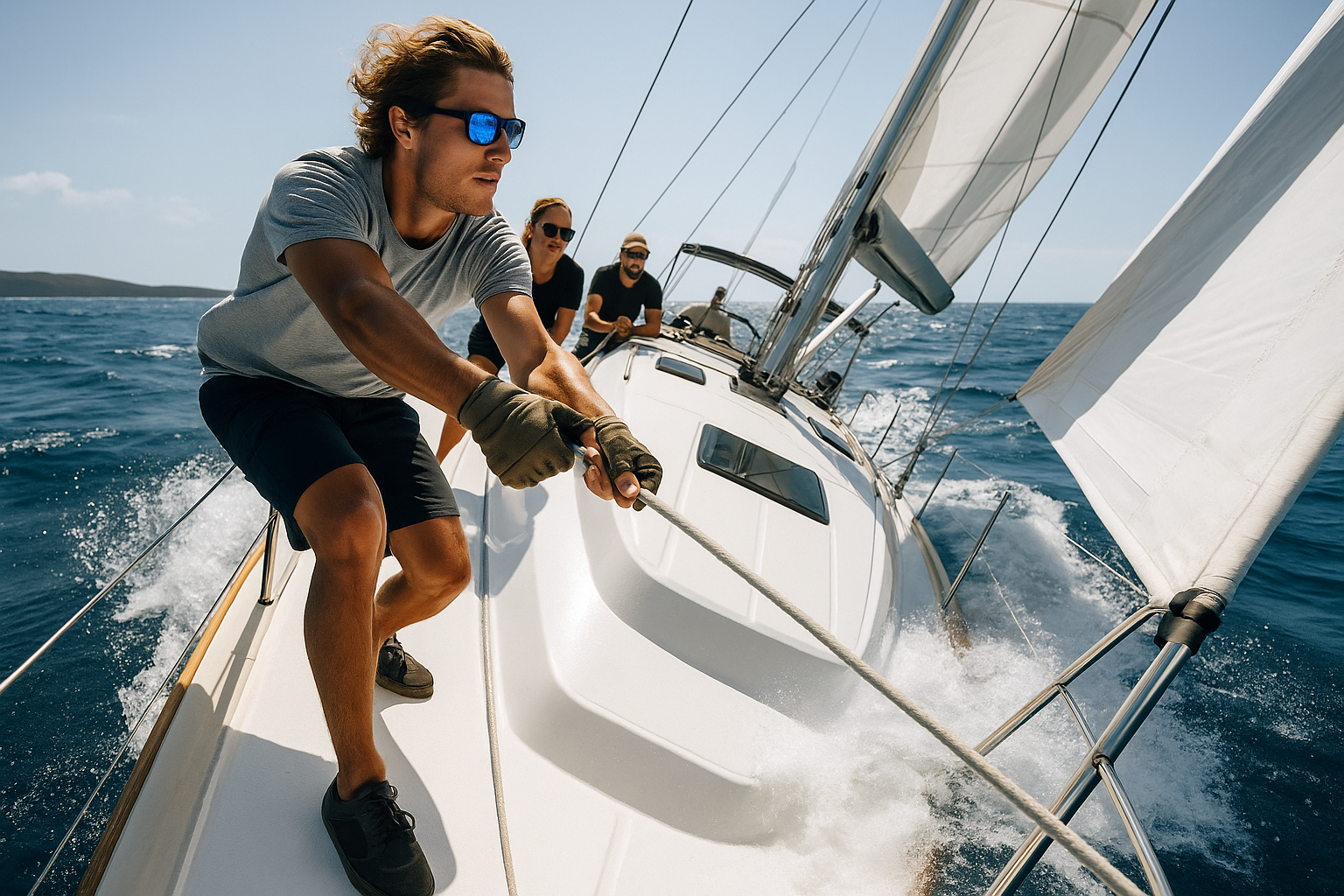
The Real Learning Curve for Athletic Minds
Here's how fast sailing actually becomes second nature when taught properly:
Days 1-2: Foundation Building Your skiing background gives you an immediate advantage in understanding how your body position affects performance. Most adventure athletes master basic sail trim and steering within hours, not days. The boat becomes an extension of your body the same way skis do - it's just a different kind of edge control.
Days 3-4: Confidence Building
This is where traditional students often stall, but adventure athletes accelerate. You're comfortable with the feeling of controlled speed and understand that small adjustments have big effects. By day four, you're typically handling docking, anchoring, and sail changes with the same calm confidence you bring to challenging terrain.
Days 5-7: Advanced Integration By the end of a week, most adventure athletes are performing complex maneuvers that traditional students might not attempt for months. Weather interpretation, and advanced boat handling become extensions of your existing risk assessment and situational awareness skills.
The key difference isn't physical ability - it's mental approach. Adventure athletes understand that competence comes from progressive challenges, not from playing it safe. They're willing to feel slightly uncomfortable while learning because they know that's where growth happens.
How long does it take to learn sailing? For someone with an adventure sports background, functional competency happens in days, not months. True mastery, like any skill worth pursuing, takes longer, but you'll be having incredible experiences from day one, not waiting months to finally "get it."
The most telling statistic from our data: 89% of adventure athletes describe their first sailing experience as "exhilarating," while only 34% of traditional students use similar language. That difference isn't accidental - it's the natural result of teaching sailing as the adventure sport it was meant to be.
Why Skiers and Snowboarders Have a Massive Advantage
The Skill Transfer You Never Knew Existed
Is sailing harder than skiing? Not if you understand the remarkable overlap between these two sports. While the environments are completely different, the core skills transfer at an almost uncanny rate. Here's the breakdown that most sailing instructors never mention:
|
Skiing Skill |
Sailing Equivalent |
Transfer Rate |
|
Reading terrain and snow conditions |
Reading wind patterns and water state |
85% |
|
Edge control and carving |
Sail trim and angle of attack |
80% |
|
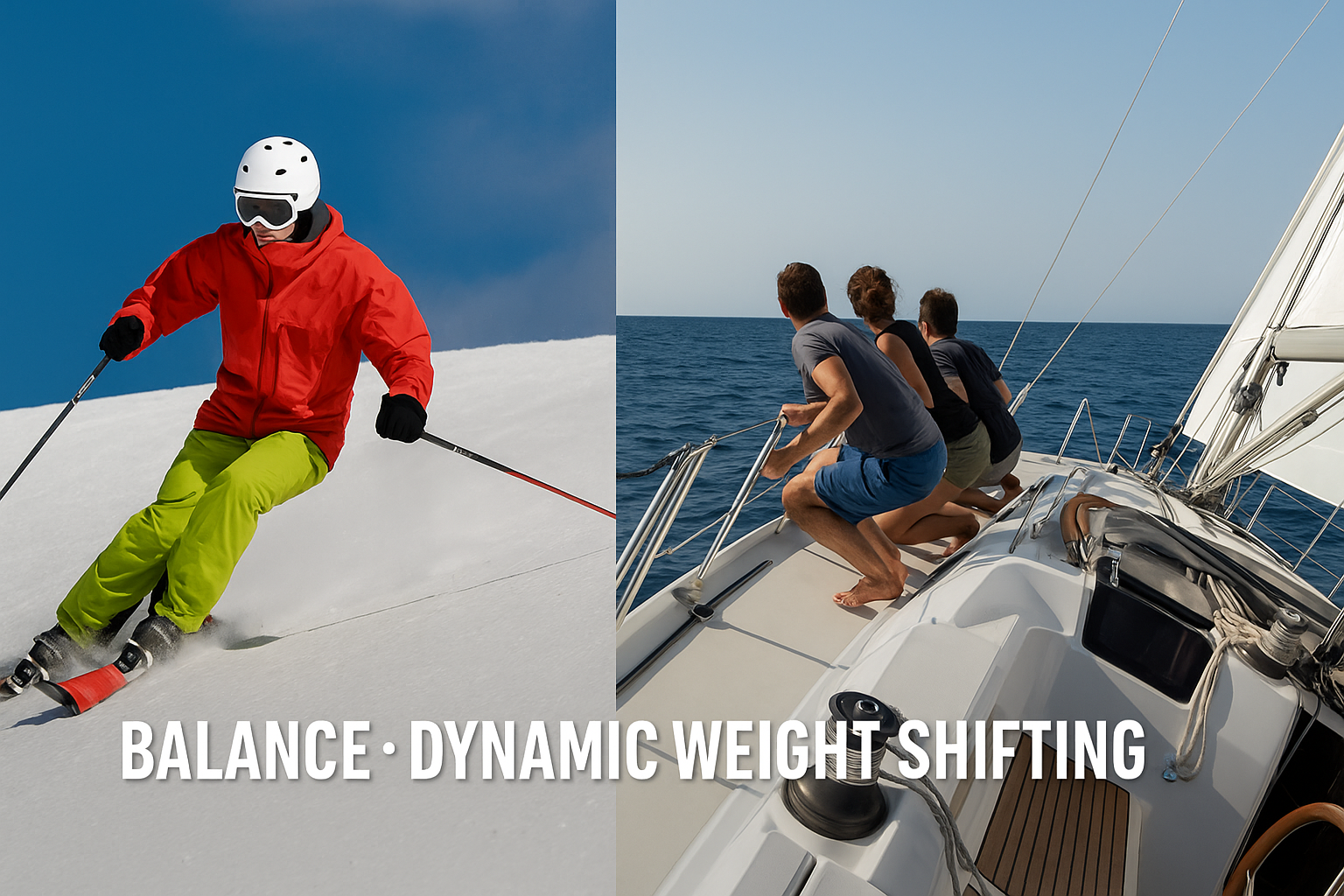
Balance and dynamic weight shifting |
Boat balance and crew weight placement |
90% |
|
Quick risk assessment |
Weather judgment and safety decisions |
95% |
|
Equipment awareness and maintenance |
Boat systems and sail handling |
75% |
|
Rhythm and timing in turns |
Tacking and jibing timing |
85% |
The high transfer rate is due to the fact that both sports require you to harness natural forces rather than fight them. In skiing, you use gravity and momentum; in sailing, you use wind and water. In both cases, the magic happens when you stop trying to overpower the elements and start working with them.
Consider this: when you're skiing moguls, you're constantly making micro-adjustments based on feedback from your equipment. Your skis tell you about the snow conditions, your body position affects your control, and you're processing dozens of variables simultaneously. This is exactly what happens when sailing - you're reading feedback from the boat, the sails, and the water, making constant adjustments to maintain optimal performance.
The Adventure Athlete Mindset
Beyond the technical skills, skiers and snowboarders bring something even more valuable: the adventure athlete mindset. This mental framework is what truly accelerates learning:
Comfort with Calculated Risk: You already understand the difference between dangerous stupidity and intelligent risk-taking. When a sailing instructor suggests trying a new maneuver in building wind, you don't panic - you assess the situation with the same methodology you use to evaluate whether to drop into a steep chute.
Progressive Skill Building: Skiers naturally understand that you master greens before blues, blues before blacks. This knowledge prevents the common sailing mistake of trying to do everything at once. You're comfortable with the learning process because you've done it before.
Equipment Respect and Intuition: Adventure athletes develop an intuitive relationship with their gear. You can feel when something isn't right - when your ski edges need attention, when your bindings feel off, when conditions are changing. This same sensitivity transfers directly to sailing, where boat handling is all about feeling subtle changes in pressure, balance, and performance.
Flow State Recognition: Perhaps most importantly, you already know what it feels like when everything clicks. That moment when you're carving perfect turns through fresh powder, when conscious thought disappears and you're purely responding to the mountain - that exact same flow state exists in sailing. You recognize it instantly when it happens, and you know how to get back to it.
The "3x Faster" Method: How Adventure Junkies Learn Differently
Why Traditional Sailing Instruction Fails Athletes
Walk into most sailing schools and you'll immediately understand why adventure athletes get frustrated. The pace is glacial, the approach is overly conservative, and the entire experience feels designed for people who consider a gentle afternoon breeze to be "exciting weather."
Traditional sailing instruction treats students like they're made of glass. Instructors obsess over theoretical knowledge while avoiding practical application. Students spend entire weekends learning knots they'll rarely use while barely touching the helm. The learning environment is so sanitized that it strips away everything that makes sailing thrilling.
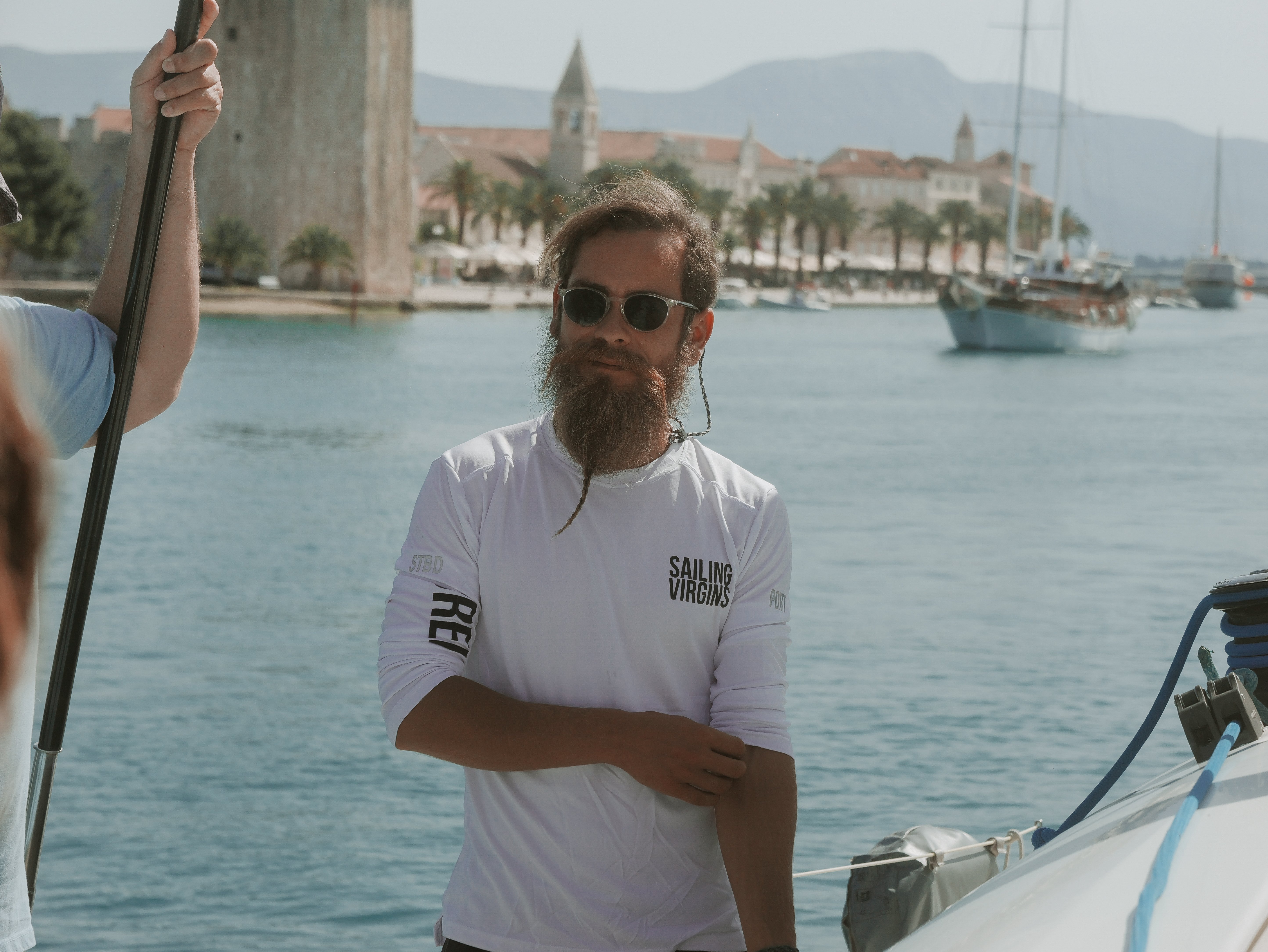
The Sailing Virgins Adventure-First Approach
Our methodology flips traditional sailing instruction on its head. Instead of starting with theory and building to practice, we start with experience and add theory as it becomes relevant. Instead of avoiding challenging conditions, we gradually introduce them as students build confidence. Instead of treating sailing like a retirement hobby, we teach it as the adventure sport it actually is.
Can I learn to sail in a week? Absolutely. But only if you learn it the right way, with the right instruction, and with the right mindset. Traditional sailing schools will tell you it takes months or years to become competent. We prove them wrong every single week.
Ready to Trade Snow Boots for Bare Feet?
You already possess 80% of the mental framework needed to excel at sailing. The physical skills transfer at remarkable rates. Most importantly, you recognize the flow state that makes adventure sports addictive - and that same flow state exists on the water, waiting for you to discover it.
The question isn't whether sailing is hard. The question is whether you're ready to master your new off-season obsession.

The mountains taught you to seek adventure. The water will teach you to find freedom.
Join over 500 adventure athletes who've already made the transition from powder to paradise. Your sailing adventure starts with a single decision - make it today.