

Ever watched someone drop their phone into the sea and vanish in seconds? Now, picture a person instead. That’s what makes man-overboard (MOB) recovery so important.
Water and wind can hide someone quickly, even in decent conditions. And when adrenaline hits, people panic and talk over each other.
In this guide, we’ll cover man-overboard recovery procedures that you can practice with your crew.
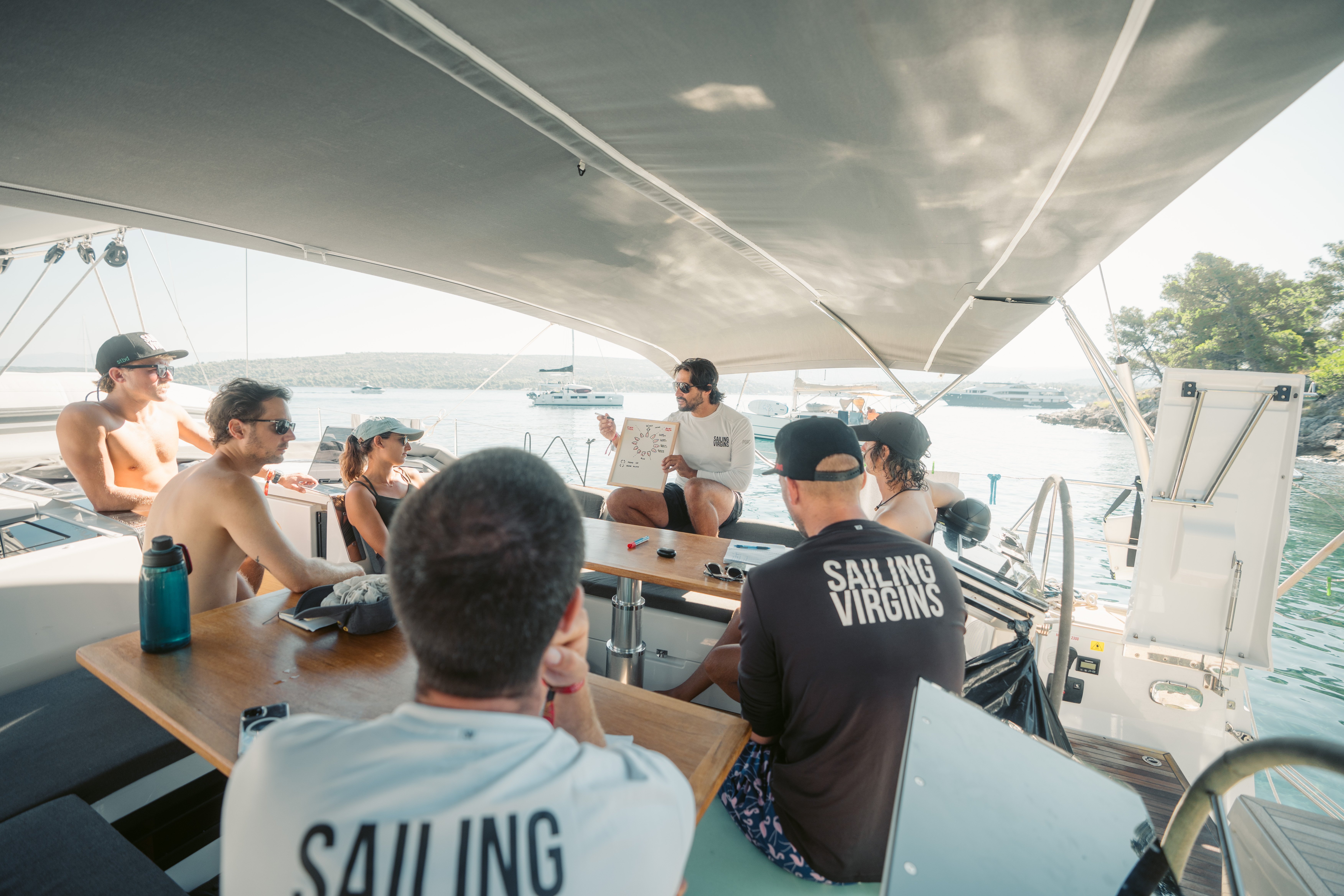
What to Do When Someone Falls Overboard
When someone goes overboard, you don’t have time for debate. Man overboard recovery works best when every crew member follows the same order.
Sailors use four words for an MOB rescue: shout, point, manoeuvre, and recover.
This method works whether you’ve got a full crew or you’re sailing shorthanded.
Step 1: ALERT the Crew Immediately
The first person who sees it immediately calls out, “Man overboard!” Repeat it clearly until everyone on board hears.
If your boat has a GPS or chartplotter, hit the MOB button right away. It marks the position so you can locate it again.
Then throw any of these immediately:
- Lifebuoy or horseshoe buoy
- Lifejacket or cushion
- Anything that floats and helps mark the spot
Even if they’re wearing a life jacket, extra flotation helps. It also gives the crew a bigger visual target.
Step 2: POINT and Keep Constant Visual Contact
Pick one crew member as the spotter. Their job is simple. Keep eyes on the person in the water and point at them nonstop.
The spotter also gives short updates, like:
- “I’ve got them.”
- “They’re off the port stern.”
- “They’re behind that wave.”
This keeps the helmsman oriented while the boat starts the return.
Step 3: MANOEUVRE Back With Control
After that, the helmsman must manoeuvre the boat back.
On a sailboat, depower the sails and prepare to tack back. Some crews use the Quick Stop drill to turn fast and keep the MOB close. Other crews take a wider turn for more control.
Start the engine if you need it for steering. Stay aware of lines near the water. A loose knot of rope near the stern can foul the prop.
Step 4: RECOVER the Person Safely Onboard
Approach from downwind or into the current, depending on which is stronger. This helps you stop near the person without drifting onto them.
Shift into neutral early. The propeller can hurt them in seconds.
Once you’re close:
- Toss a heaving line so they can grab hold
- Bring them to the stern scoop or the lowest freeboard point
- Deploy a ladder if you have one
- Haul them aboard with a halyard or sling if they can’t climb
Recovery is where seamanship gets real. A cold, tired person in the water may not be able to help much.
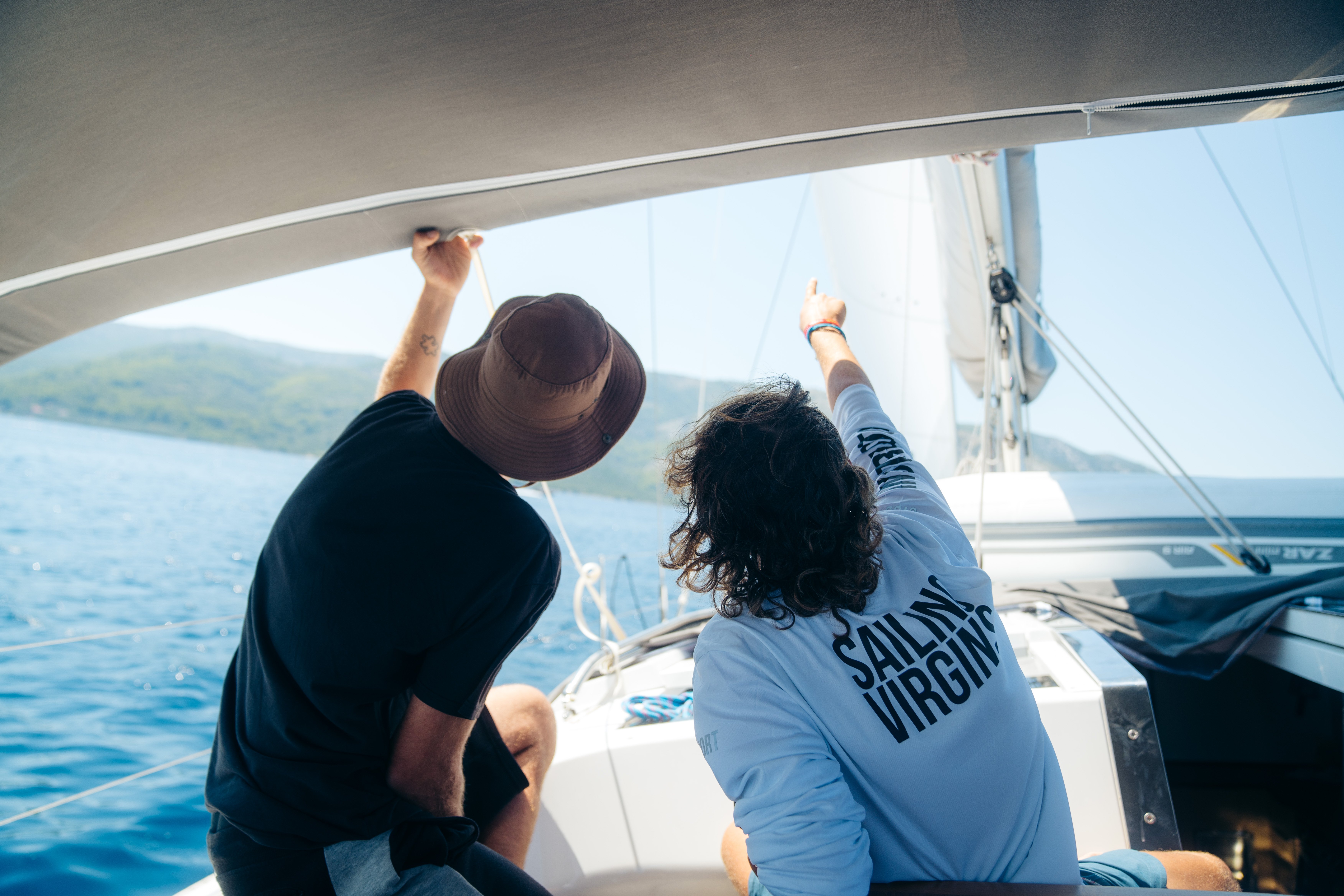
MOB Recovery Under Sail vs. MOB Recovery Under Power
Man-overboard recovery feels different under sail than it does under engine.
Sail power keeps you moving, even when you want to stop. Engine power gives you more control, but the propeller adds risk.
MOB Recovery Under Sail
Under sail, your first job is to slow the boat and set up a controlled return. Depower fast by easing sheets. Drop sails if you need to. Many crews also start the engine to help with steering.
Sail training often uses the Quick Stop or Figure Eight drill. Both help you turn back without losing sight of the person in the water.
MOB Recovery Under Power
Under power, you can steer and slow down more precisely. Use gentle bursts of throttle, then slow early. Keep your speed low as you approach.
The big rule is simple. Shift into neutral well before you reach the MOB. Never let the propeller turn near the person.
Three Common MOB Drill Methods
MOB drills help you turn man-overboard recovery into muscle memory. Each drill trains a slightly different part of the rescue. Practice all three if you can. Then pick one as your crew’s default.
- Figure eight drill: Use this to practice a controlled return under sail. It gives you time to assign roles and set up recovery gear.
- Quick stop drill: Use this when you want the fastest return. It keeps the person close and reduces the distance you drift away.
- LifeSling drill: Use this to practice getting someone back on board. It helps when the person can’t climb and lets the crew tow and haul them aboard.
Pick the drill that matches your conditions and crew size. Then practice until everyone is familiar with their roles.
Man Overboard Recovery Mistakes to Avoid
Most MOB problems don’t come from predictable mistakes. Fix them early, and your MOB recovery gets faster and safer.
Watch for these common problems.
- Forgetting to assign a spotter, then losing sight of the person in the water
- Letting too many people shout instructions at once
- Approaching too fast and overshooting the MOB
- Keeping the engine in gear near the person, which risks propeller injury
- Skipping practice and relying on memory during an emergency
These mistakes are easy to avoid once you notice them.
How Often Should You Practice MOB Drills?
Practice MOB drills often enough that everyone remembers their role immediately. New crews should run a short drill on every outing.
Regular crews should practice at least once a month. Charter crews should practice on day one, before longer sails.
Keep drills short so people don’t tune out. Rotate roles so everyone learns to spot, steer, and recover.
Practice in different conditions when it’s safe. Wind, waves, and low light change the feel of a recovery.
Turn MOB Recovery Into A Habit With Sailing Virgins ASA Courses
Man overboard recovery sounds simple on paper, but it feels very different on the water. That’s why Sailing Virgins treats MOB drills as a core part of every week-long ASA course.
You run MOB drills with a full crew and rotate roles as spotter, helmsman, and recovery lead.
You also rehearse the same recovery sequence every time, so communication becomes second nature. That repetition helps the crew react quickly, even when wind and waves add pressure.
Courses take place in the British Virgin Islands, Croatia, French Polynesia, and more.
Want to practice MOB recovery while earning ASA certifications? Start with Sailing Virgins’ beginner sailing courses!